Why does naming the Strix thermostat matter?
Because it is the part that most often decides a kettle's life. When a kettle stops switching itself off, stops switching on, or starts cutting out unpredictably, the control unit is usually the culprit rather than the element. Strix makes kettle controls for many brands and sells to manufacturers rather than to shoppers, so naming it is a claim about a specific component rather than a general promise of quality. On an inexpensive own-brand kettle, that is the most informative detail Amazon gives.
Is boil-dry protection the same as the auto shut-off?
No, though the two are easy to confuse. The automatic shut-off trips when steam reaches the sensor at boiling point. Boil-dry protection is a separate thermal cut-out that acts if the kettle is switched on with insufficient water, protecting the element from damage. A kettle can have working boil-dry protection while its steam switch is not tripping, usually because the lid was not fully closed, which lets steam escape into the room instead of reaching the sensor.
Does BPA-free mean no plastic touches the water?
No, and the difference matters if plastic-free is specifically what you are after. Amazon lists the materials as glass, plastic and stainless steel, and most glass kettle designs have plastic somewhere in the water path, typically the spout, the inside of the lid, or the collar where the body meets the base. The BPA-free statement is about the safety of whatever plastic is present rather than a claim that none is. If you want a completely plastic-free water path, look for a kettle sold specifically on that basis.
How does limescale affect the safety system?
Directly, which is why descaling is more than a cosmetic job here. Every boil leaves dissolved minerals on the hottest surface, the element in the base. Scale insulates, so the element works harder to deliver the same heat, which slows the kettle and shortens its life, and heavy buildup can interfere with the steam path that operates the Strix control. When the sensor does not see the steam, the kettle can boil on without switching off.
How do I descale it, and how often?
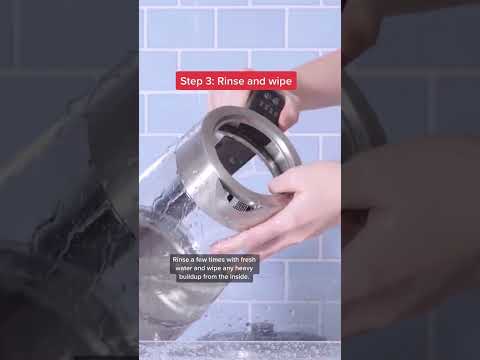
Whenever you can see deposit, which on a glass kettle you can. Use food-grade white vinegar or citric acid: fill partly with a vinegar and water mix, bring it to the boil, leave it to stand, empty it, then boil clean water once or twice to clear the taste. In a hard-water area expect to do this regularly; with filtered water it is needed far less often. Avoid strong cleaning vinegar, which one owner found caused a leak at the base.
Is an own-brand kettle a false economy?
Not inherently. An own-brand kettle is sold without a brand premium, and this one still names its control unit, fits boil-dry protection and uses BPA-free water-contact materials. What you may give up is a maker with a reputation of its own to protect. On this particular kettle, the named Strix control is the reassurance that the part most likely to fail was not where the cost was cut, and good descaling habits do the rest.