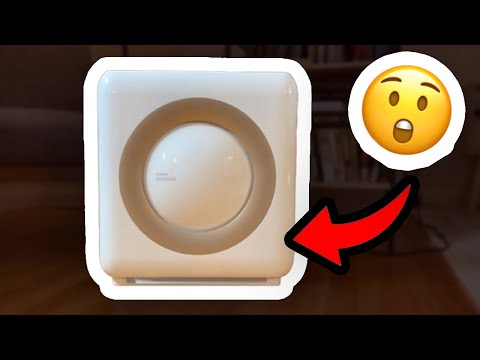


The Pollution Sensor, and Why Auto Mode Changes Everything
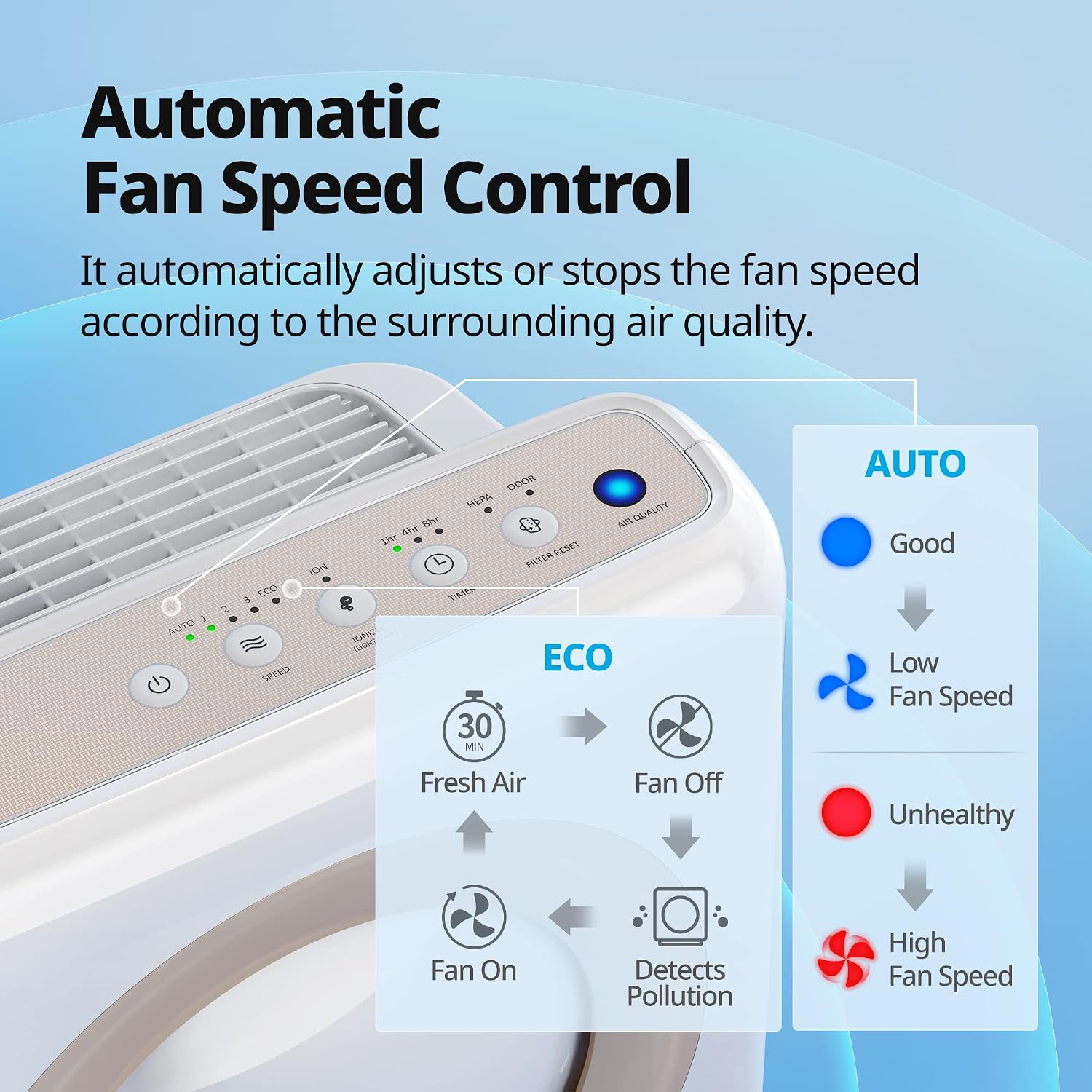
Most air purifiers run at whatever speed you last set them to, which sounds unimportant and is the biggest reason they underperform in real homes. Air quality is not constant. It spikes when you cook, when someone vacuums, when a dog comes in from a wet walk, when pollen counts rise, when a candle burns. A machine running steadily at a low setting misses all of that, and a machine left on high runs loudly and wastefully for the hours when nothing is happening. This one has a pollution sensor and reports what it finds continuously through a brightly coloured LED, so the state of your air is visible at a glance from across the room, and in auto mode it raises and lowers the fan between speeds 1 and 3 by itself. When it detects no pollution for 30 minutes, Coway says the fan stops and the machine drops into Eco mode to save energy. That is what turns a purifier from an appliance you have to remember into one that simply works, and it explains how the same machine can be both quiet and effective. The sensor is responsive: it ramps up for cooking smells and settles back once the air clears. Three manual fan speeds remain if you would rather decide yourself, and a timer runs the machine for one, four or eight hours before switching off.