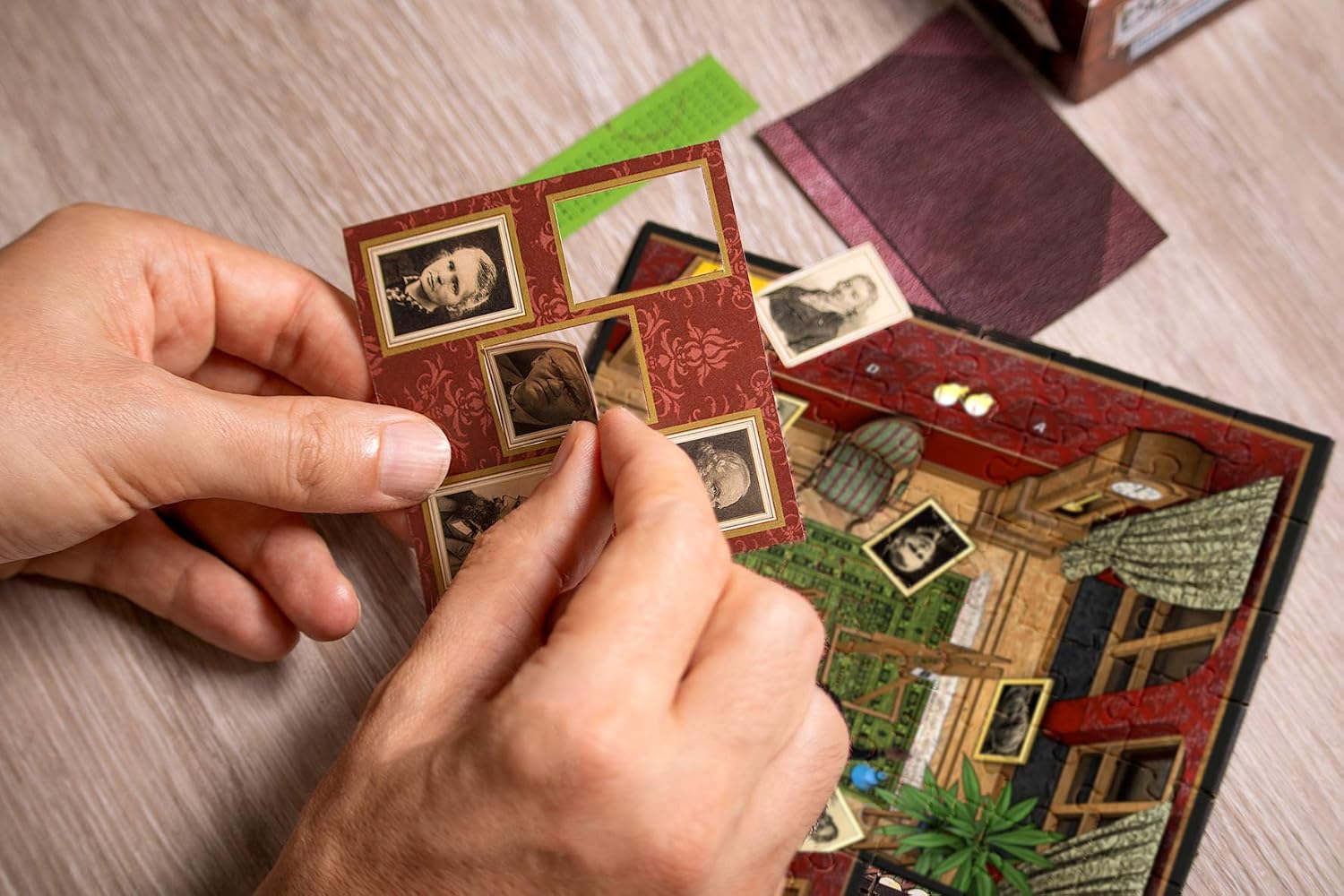
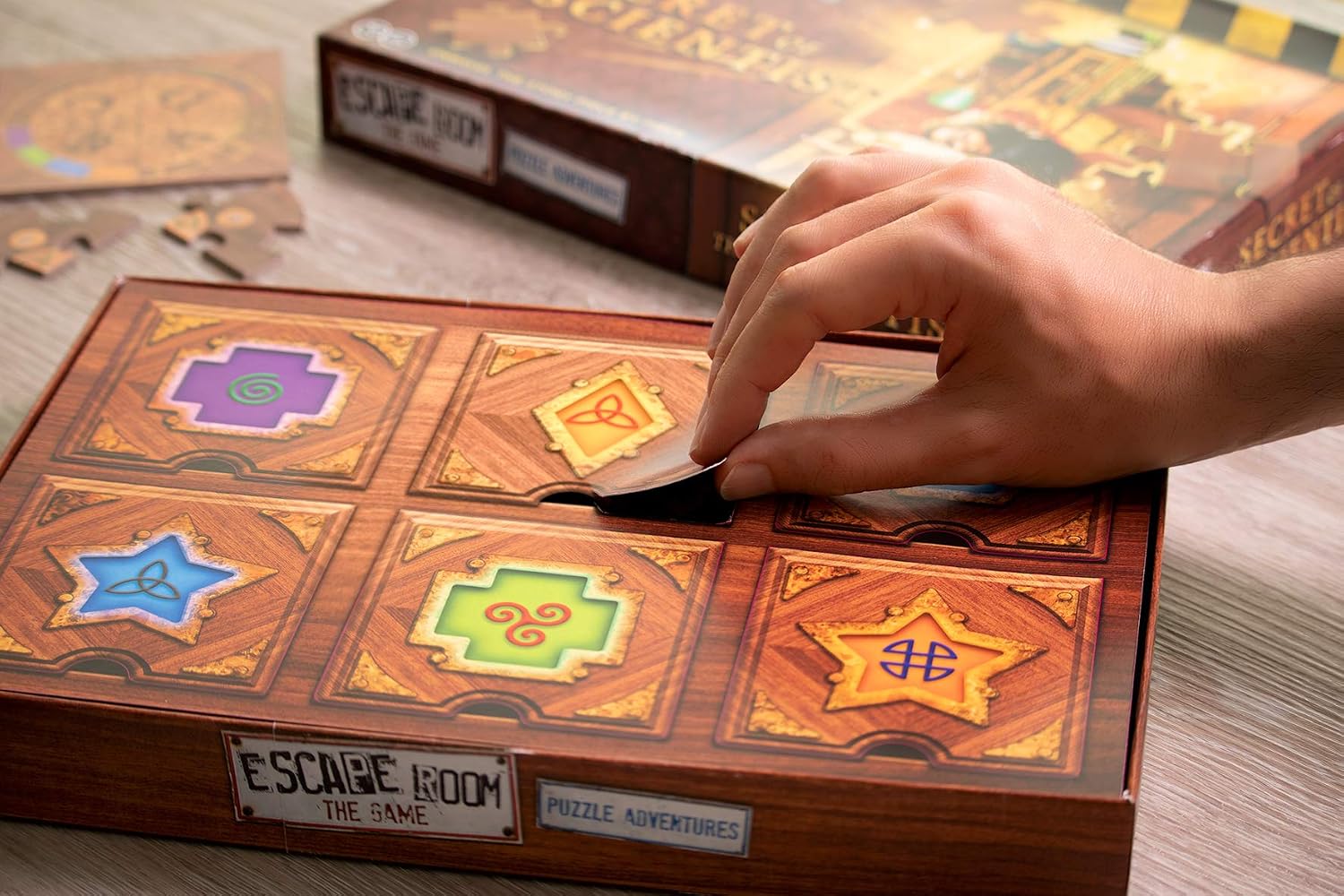
What's actually inside the box, and how does the escape-room-plus-jigsaw-puzzle idea work?
You solve riddles to earn puzzle pieces, and the box itself opens in stages like an advent calendar. There are five separate puzzle sections in total, about 300 pieces altogether, each one part of a larger image of a mansion, plus a puzzle-style decoder for checking your answers. So this isn't a traditional large jigsaw so much as five smaller puzzles tied together by a story.
How many people can play, and is it worth it solo?
It's built for one or two players, and both work well. Solo, it makes a satisfying single evening. As a pair, it divides naturally, with one person stronger on the jigsaws and the other on the riddles. More than two people tends to be too many around one small puzzle.
What age is this really meant for?
Identity Games recommends it for ages 16 and up. With an adult alongside, younger teenagers can enjoy it too, and a logical twelve- or thirteen-year-old may well end up leading the riddle-solving. Without the timer it makes a good family project.
How long does it take to finish, and can you replay it afterward?
It depends on the group and the pace. An experienced solo player can finish in one evening; a parent and child might take around four hours spread over a couple of weeks. Since it's one continuous story building to a single resolution, it's designed to be solved once per copy, but nothing needs to be written on, so it can be repacked and passed on to someone new afterward.
Are missing pieces a problem?
Occasionally. Some boxes arrive with a compartment that doesn't contain what its flap lists, which can stop the game before it starts. A replacement copy usually solves it. Identity Games doesn't offer a warranty on this game, so check every compartment's contents as soon as the box arrives, while you can still return it.
Is the difficulty level consistent, or does it vary a lot?
It varies. The first compartment is usually the hardest, partly because the riddle is tricky and partly because you are still learning how the decoder works. After that it tends to flow more smoothly. The riddles can be worked out logically rather than guessed, which keeps frustration down, but some players will still find the jump between sections uneven.