What do I lose by choosing steel over glass?
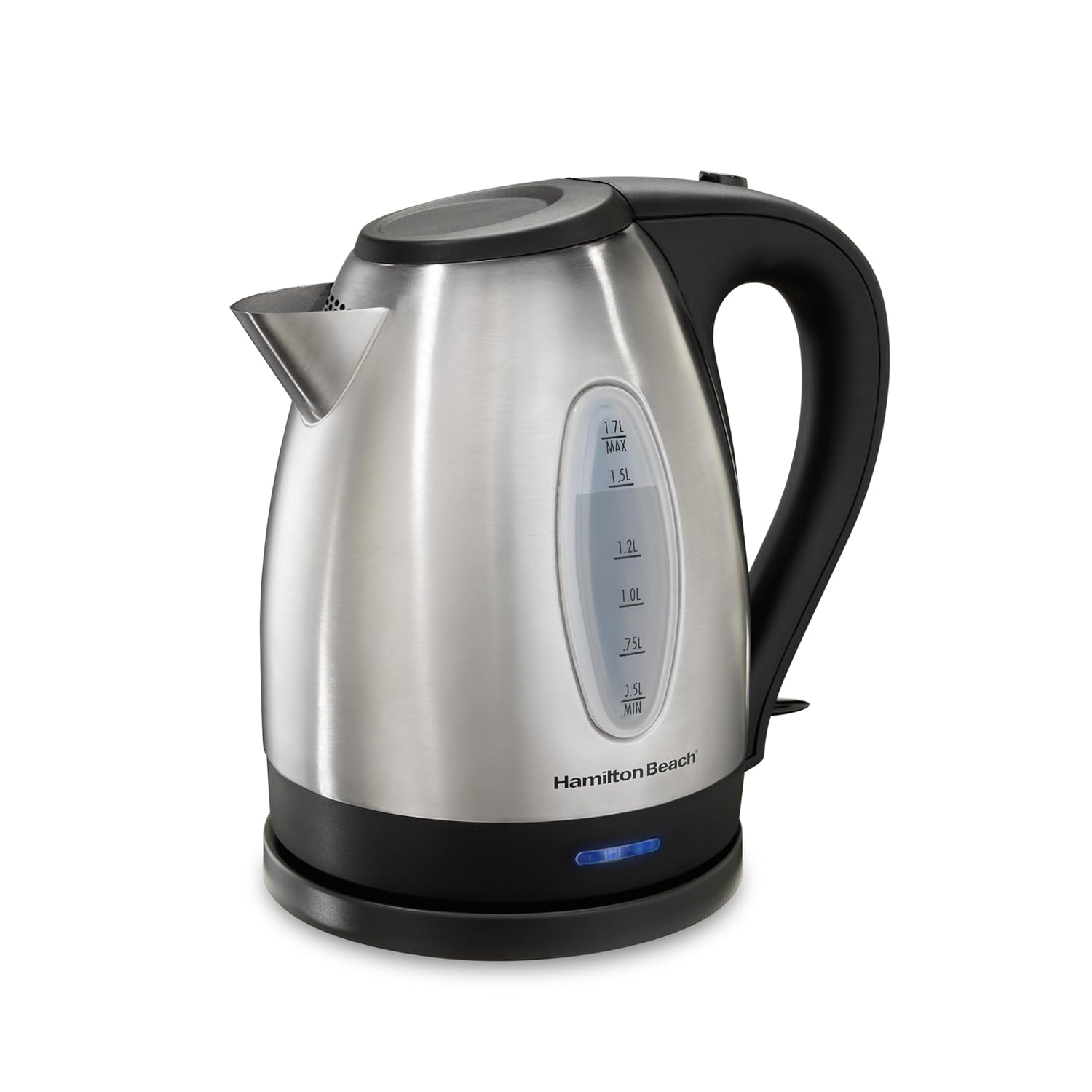
The ability to see limescale forming. In a glass kettle you descale when you can see the need; in a steel one the same deposit builds out of sight, and the first signs are indirect: the kettle taking longer to boil, sounding louder, or white flakes appearing in a cup. The fix is a habit rather than a product: open the lid in good light every so often and look at the base. That habit replaces the thing glass gives you for free.
How do I descale it?
When you can see deposit, use white vinegar or citric acid: part fill the kettle, bring it to the boil, leave it to stand, empty it, then boil a few changes of clean water to clear the taste. In a hard-water area this is routine; with filtered water it is rare. It matters more than it sounds, because scale insulates the element so it works harder for the same result, and flakes can interfere with the parts that switch the kettle off. Wash it by hand only, as Hamilton Beach instructs.
Is a kettle really safer than heating water in the microwave?
Yes, and for a specific reason few people know. Water heated in a smooth container in a microwave can superheat, rising above boiling point without actually boiling because there is no rough surface for bubbles to form on, and then boil violently when disturbed by a spoon or a teabag. An electric kettle's element gives bubbles somewhere to form, so the water boils normally, and the kettle switches itself off when it does.
Why is it faster than a microwave or a hob?
Against a microwave, a kettle puts a 1500-watt element straight into contact with the water, so nearly all the energy goes where you want it, and it knows when the water has boiled instead of relying on a guessed time. Against a stovetop kettle, a hob heats through the base of a pan and loses a lot of heat to the surrounding air, so the same water takes longer.
Does the outside get hot?
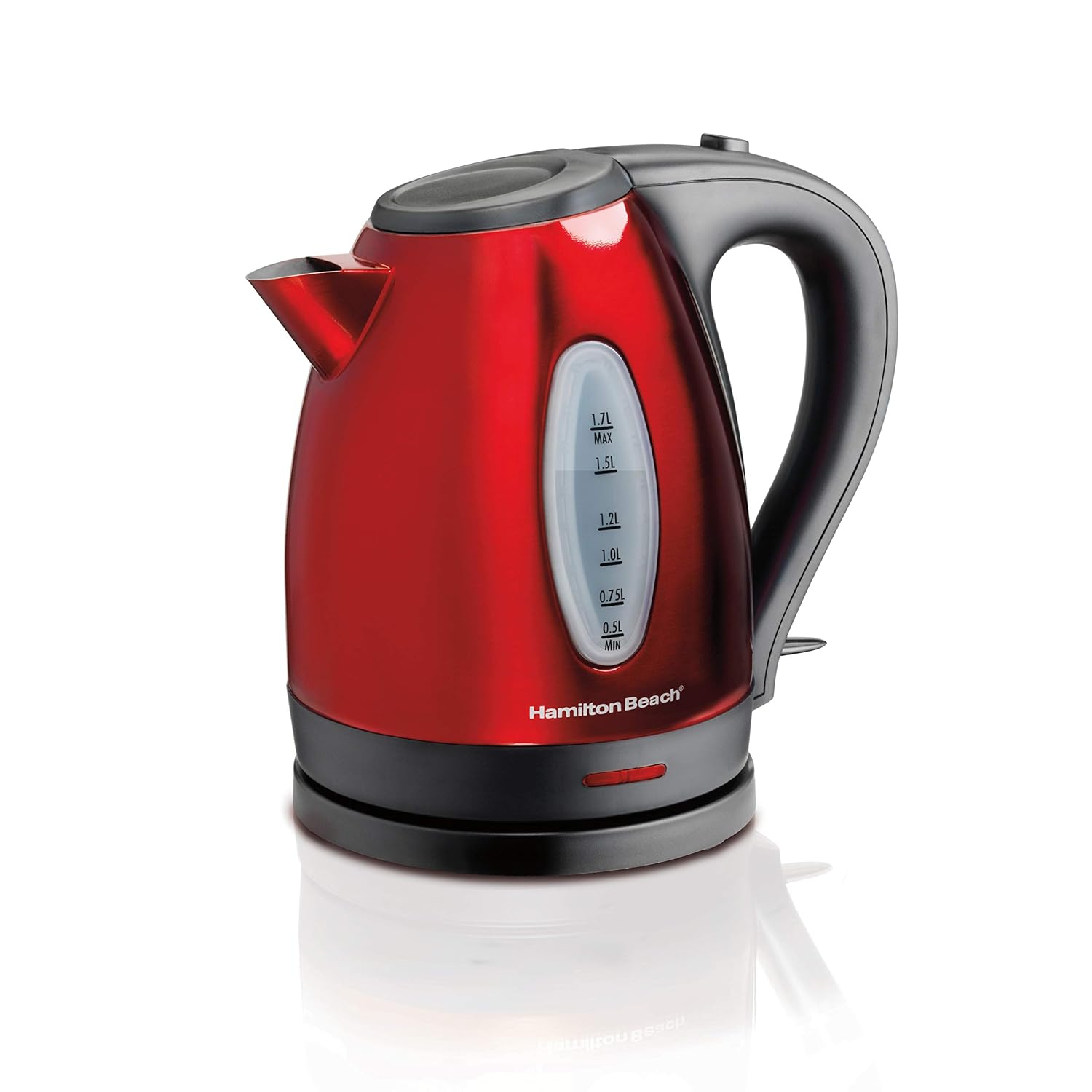
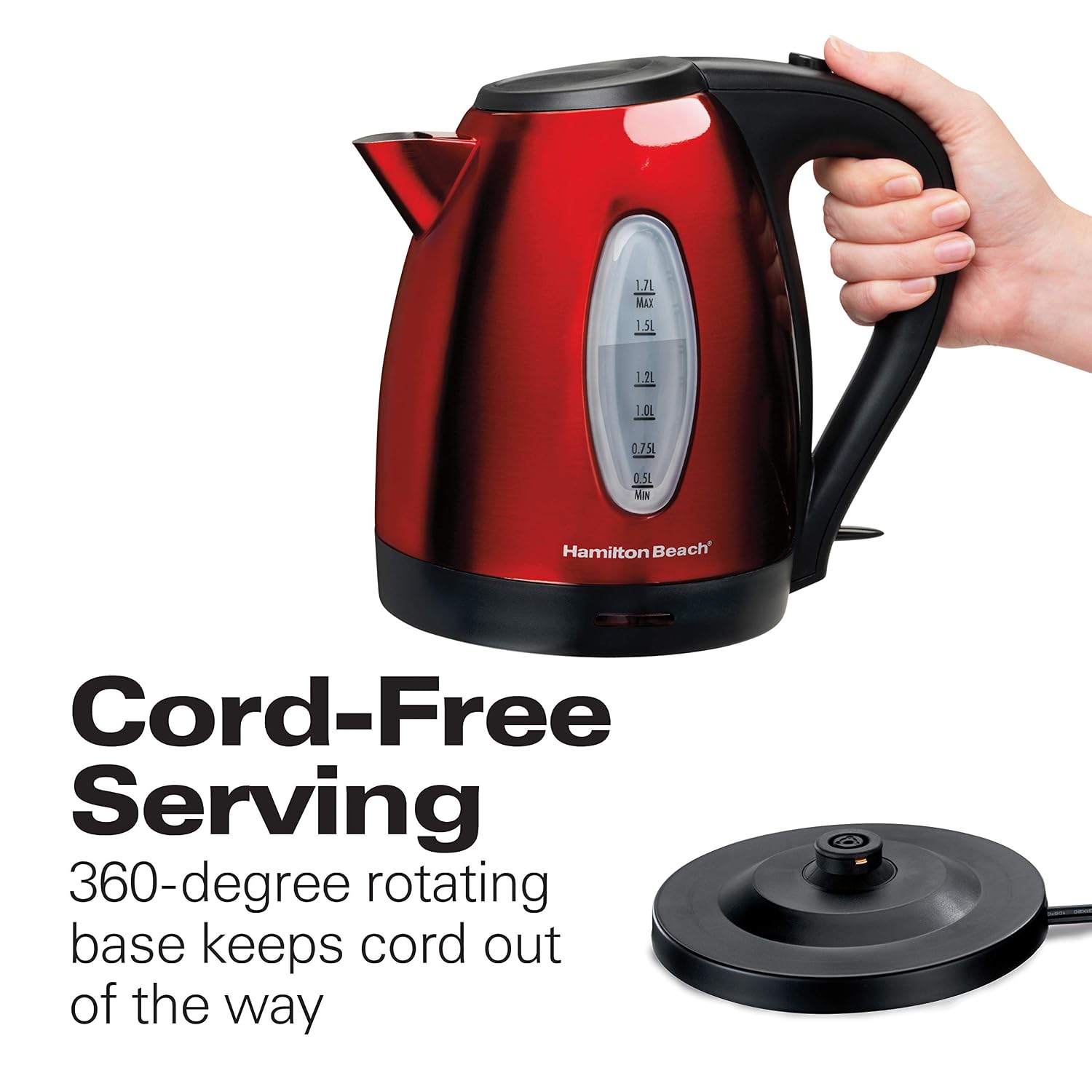
Yes, very. The steel body gets hot enough to be worth warning others in the house about, while the handle stays cool. Always lift and pour using the handle, and keep the kettle towards the back of the counter if children are around.
It boils and will not switch off. What is wrong?
Usually the lid. On most kettles of this type the automatic shutoff is triggered by steam, and a lid left ajar lets the steam escape before it can do its job. Push the lid fully closed every time. The other common cause is scale, which is the maintenance job above. Boil-dry protection is a separate feature that only acts when the water runs too low, so it will not stop a kettle that is boiling normally. If a firmly closed, clean kettle still does not switch off, stop using it and use the one year warranty.